Large development projects can change how people use a neighborhood. A studio campus may bring construction activity, workers, service needs, and new attention to nearby blocks. The effect can vary from one street to the next.
This article explains a simple way to review public project information and local property records. It is general property information only. It is not tax, legal, financial, or real estate advice.
In This Guide
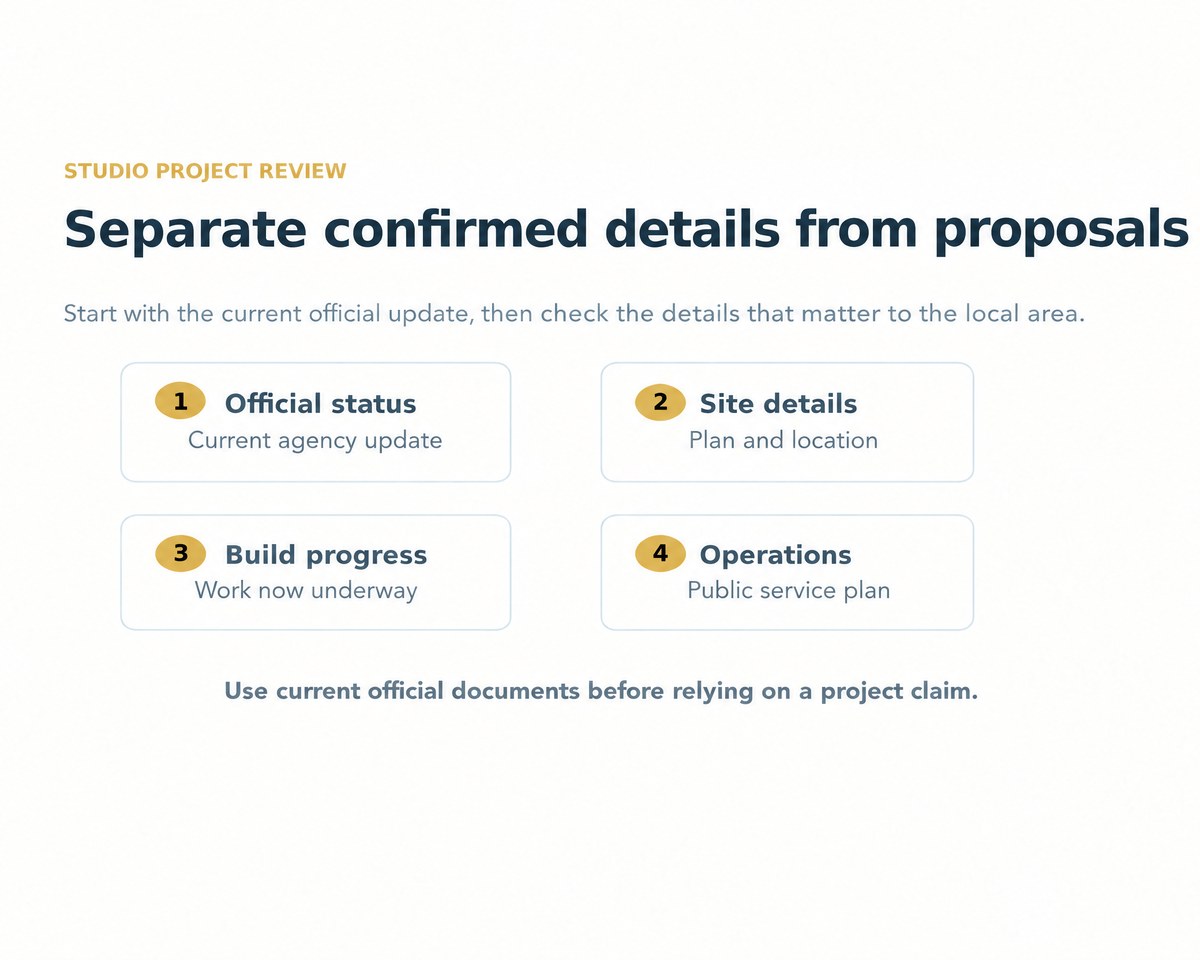
Three checks before you rely on studio news
Check the official update
Confirm what a public agency or project source has announced.
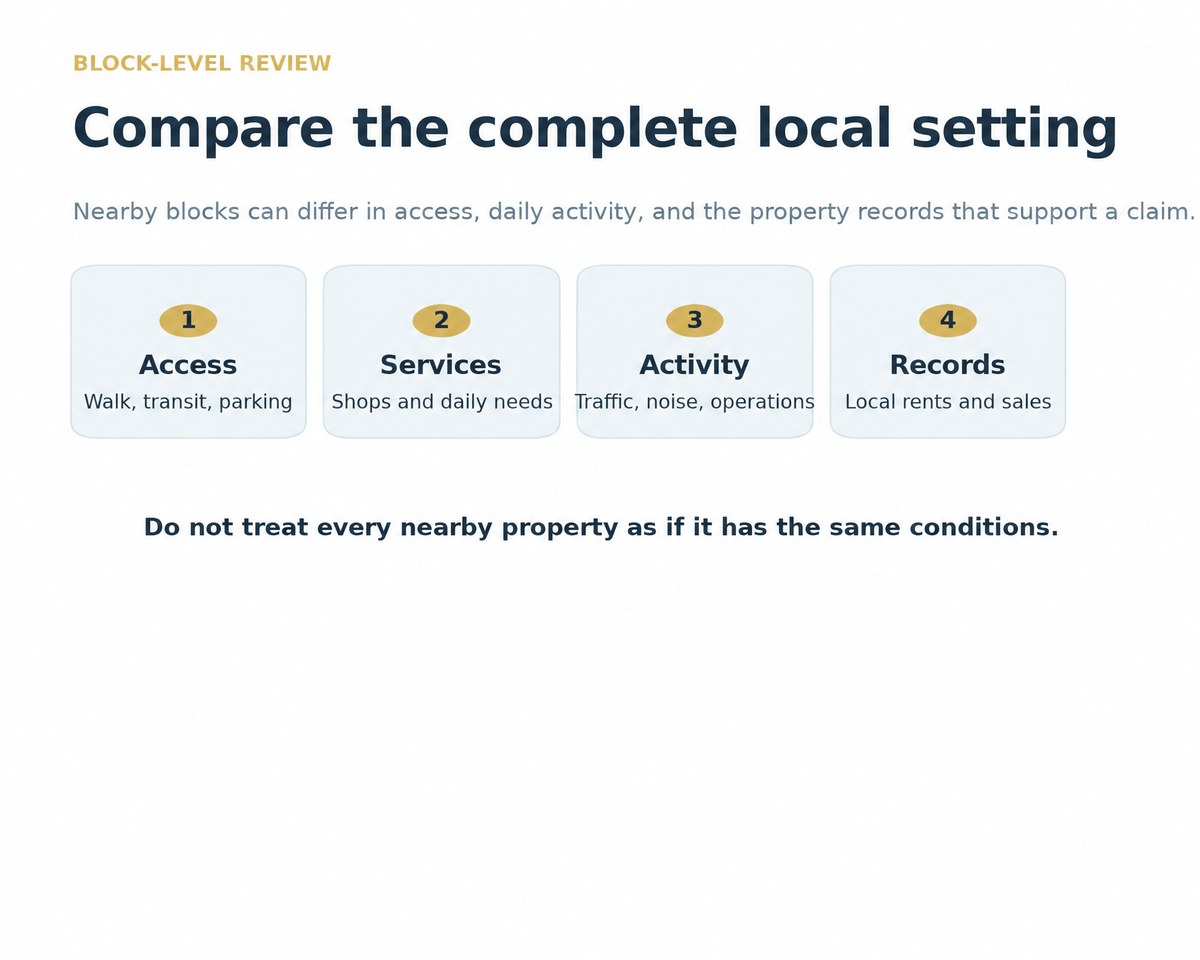
Check the block
Review walking routes, transit, traffic, noise, and nearby services.
Check local records
Use current local rents, leases, sales, and property details.
What is publicly confirmed about 1888 Studios?
The New Jersey Economic Development Authority announced that it designated 1888 Studios in Bayonne as the state’s first Film-Lease Partner Facility. That announcement is a useful starting point for confirming the project’s public status. [1]
Project details can change. Before relying on a claim about the site, check the newest official materials for the current scope, construction status, operating plan, and public timelines. Do not rely only on an early headline.
Use current official documents to separate confirmed project details from items that are still proposed. [1]
Why a studio can affect nearby property demand
A large worksite or operating campus can change daily activity nearby. Workers, vendors, and visitors may increase demand for places to eat, shop, park, or stay. A studio can also draw attention to an area that was previously less visible.
Those changes are not automatic. Nearby blocks can have different results because of street design, transit access, building condition, traffic, noise, and the quality of local services. A quiet, walkable block may feel different from a block next to a heavy truck route.
For that reason, a broad claim about “studio proximity” is not enough. Review the specific property and the trip people would actually take between the studio, transit, housing, and local services.
How to review a nearby block
Start with access. Check sidewalks, crossings, parking, bus or rail connections, and the route between the property and the studio area. A short map distance does not always mean a simple daily trip.
Then review possible friction points. Construction activity, truck routes, late-night operations, lighting, and security plans can affect how nearby residents and businesses experience a location. Look for current public documents and local observations.
Compare the same block-level factors for each property rather than treating every nearby street the same.
How to use market information
Use current local records for the closest comparison. Recent rents, leases, sales, vacancy, and property condition can help show whether a particular block is already changing.
Broader market reports can provide regional commercial context. The National Association of REALTORS® Metro Market Dashboard is one example, but it does not replace a review of a specific property or street. [2]
Keep the source and date for every data point. This makes it easier to distinguish a verified local record from a broad market statement.
Common mistakes to avoid
Do not assume every property near the studio will change in the same way. Access, traffic, noise, and street design can create different conditions within a short distance.
Do not treat a project announcement as proof that a particular property will increase in value. Project scope, timing, and operations can change before the project is complete.
Do not replace local records with a general story about studio demand. Use current documents for the actual property and neighborhood you are reviewing.
Sources
Sources for further verification
Use current primary and institutional sources when reviewing a specific project or property.
NJEDA announced the designation of 1888 Studios in Bayonne as the state’s first Film-Lease Partner Facility. Check current official materials for the latest project details. [1]
No. Access, traffic, noise, sidewalks, transit, nearby services, and building condition can create different results from block to block.
Verify the official status, current scope, construction progress, operating plan, and any public timelines. Use the newest official material available. [1]
No. Regional reports can provide context, but local property records are more useful for a specific street or building. [2]
Considering a Sale?
Talk to X1031 Exchange Before Your Closing
Contact X1031 Exchange to learn about the company’s services. For tax, legal, financial, or real estate advice, work with your own qualified professionals.