Understanding Embedded Gain in Investment Property
General Property Education
Start with the property records
Property values can change over time. Owners sometimes use the term embedded gain for the difference between a property’s current value and its adjusted basis. It is a useful concept for understanding why records matter.
This article gives a plain-language overview of the records and terms involved. It does not calculate a tax result or recommend a course of action. It is general property information only.
In This Guide
Three records to understand first
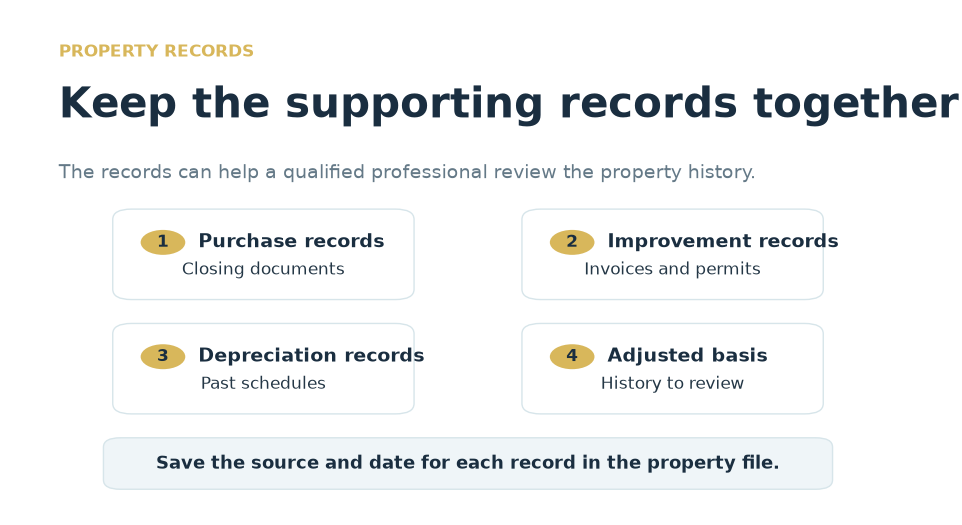
Purchase records
Keep the closing records and documents that support the original cost.
Improvement records
Keep invoices, permits, and contracts for qualifying work.
Depreciation records
Keep past schedules and returns with the property file.
What does “embedded gain” mean?
An embedded gain is a phrase used for value that exists on paper before a sale. For a property, people often compare a current value with the adjusted basis shown by the property records.
Adjusted basis begins with the property’s basis. The IRS explains that basis is generally the owner’s investment in the property for tax purposes. Certain events can increase or decrease that figure over time. [1]
The phrase does not tell you what a specific transaction will mean for you. It only describes why accurate records are important before a property is sold, transferred, or reviewed.
Keep the key records together so a qualified professional can review the complete property history. [1]
Why adjusted basis can change
Basis is not always the same as the original purchase price. The IRS notes that certain improvements can increase basis, while certain deductions, including depreciation, can reduce it. [1]
That is why a complete property file matters. A closing statement, improvement invoice, permit, contractor agreement, and depreciation schedule can each provide part of the history.
Do not assume that an old estimate or a single document tells the whole story. The records should be reviewed together by the qualified professional handling the specific matter.
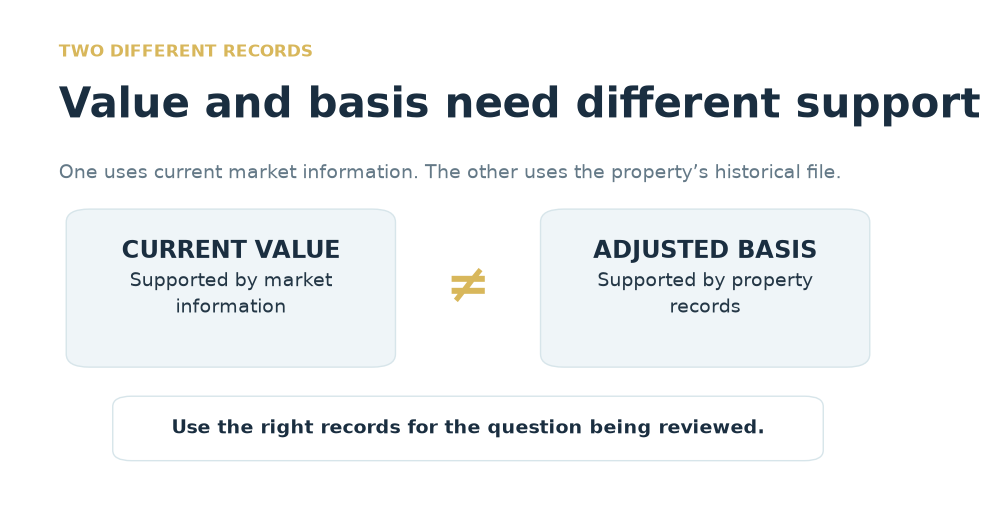
Current value and adjusted basis are different records
Current value is supported by market information, such as recent comparable sales or a professional valuation. Adjusted basis is supported by the property’s historical records. They answer different questions.
Comparing the two can help an owner understand the information that may need a closer review. It is not a substitute for an appraisal, legal opinion, tax calculation, or other professional work.
Use current market support for value and complete property records for adjusted basis. Both are needed for a clear review.
How to keep the property file organized
Keep the original closing documents in one place. Add records for major work as it occurs, including invoices, permits, and contracts. Keep copies of prior depreciation schedules with the file.
Save the source and date for any market information you use. This makes it easier to tell a current property record from a general market claim.
The IRS advises owners to keep accurate records of items that affect basis. [1] A qualified professional can explain which records are important for a specific review.
Questions to take to a qualified professional
Ask which documents are needed to confirm the property’s historical records. Ask whether any information is missing, unclear, or needs to be reconstructed from reliable documents.
Ask how the current property value should be supported. A broker, appraiser, attorney, accountant, or other professional may have a different role depending on the question.
Ask for an explanation in plain language. The goal is to understand the records, the assumptions used, and any limits on the analysis.
Sources
Sources for further verification
Use current official sources and qualified professionals when reviewing a specific property or transaction.
An embedded gain is a term used for the difference between a property’s current value and its adjusted basis before a sale. A qualified professional can explain how the records apply to a specific situation.
Examples can include original closing records, certain improvement records, and depreciation schedules. The IRS explains that some events can increase or decrease basis. [1]
No. Current value is supported by market information. Adjusted basis is supported by the property’s historical records. They are different measures.
Keeping records together helps a qualified professional review the property history and identify missing documents. The IRS advises owners to keep accurate records of items that affect basis. [1]
Considering a Sale?
Talk to X1031 Exchange Before Your Closing
Contact X1031 Exchange to learn about the company’s services. For tax, legal, financial, or real estate advice, work with your own qualified professionals.