The Jersey City waterfront includes homes, offices, retail space, transit connections, public areas, and redevelopment sites. A useful property review begins with the current documents for the exact address.
This article explains how to read local planning, property, and market information in plain language. It is general property information only. It is not tax, legal, financial, zoning, or real estate advice.
In This Guide
Three checks for a waterfront property review
Check the site
Review the exact address, access, condition, and property history.
Check local rules
Read the current zoning material and any plan that applies.
Check the source
Separate current public records from broad market claims.
Why the waterfront needs a site-specific review
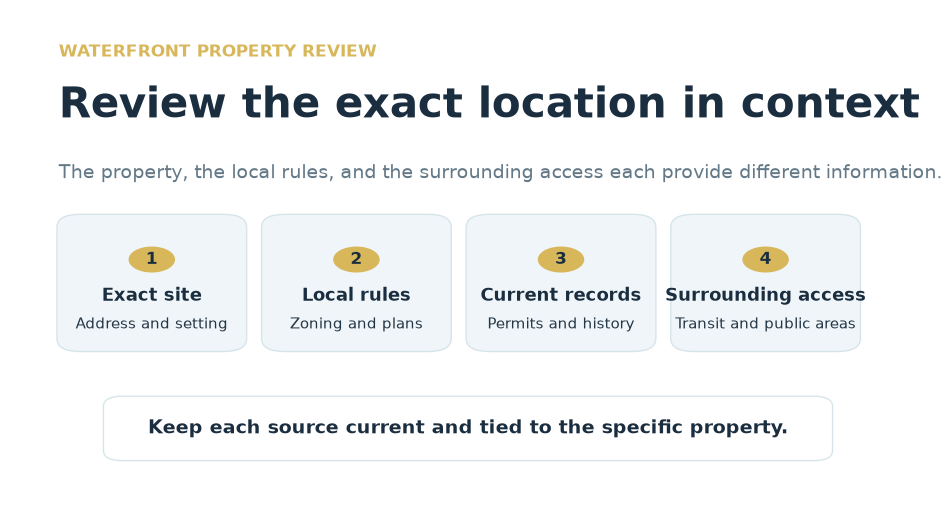
Waterfront properties can have different features from inland properties. Access, views, public areas, building systems, and nearby transportation can vary from one block to the next.
The visible setting is only one part of the property record. Site history, permits, zoning, building condition, and local requirements can each affect the questions that need to be reviewed.
For a Jersey City address, the Division of Zoning is an official starting point for current zoning information and process guidance. [2]
Use the exact site, local rules, current records, and surrounding access as separate parts of the review. [2]
How planning and zoning information fits in
Local planning documents explain how a city may guide land use, transit access, public areas, and building form in a defined area. They provide context, but they do not replace the rules for a specific parcel.
The Journal Square 2060 Redevelopment Plan is one City planning source that describes a long-term redevelopment framework for its defined area. Read the plan and its maps to understand where it applies. [1]
Waterfront properties may be in a different district or planning area. Check the current zoning map, the applicable code, and any special plan for the exact address.
What to keep in a waterfront property file
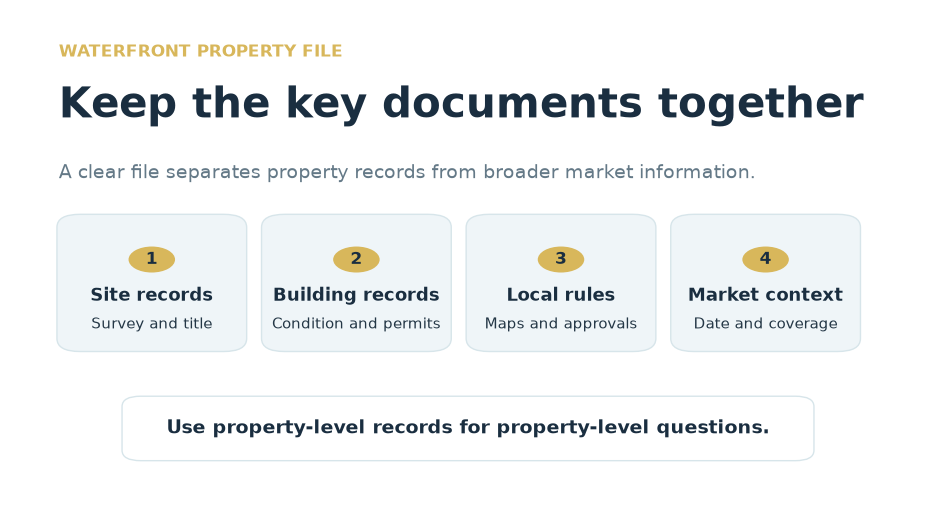
Keep the current zoning map, permits, survey, title information, building records, and prior approvals together. Save the source and date for each document.
For a water-adjacent property, also keep records that explain access, site conditions, and any known public or private obligations. A qualified professional should review questions that depend on a specific title, structure, permit, or legal right.
Use current records for the building itself. A neighborhood description or a listing image does not show the full condition or approval history of the property.
Keep the site, building, local-rule, and market-context records together while keeping their sources clear.
How to read market information carefully
Market reports can provide broad context for housing, rent, vacancy, and commercial conditions. They can help describe a larger area, but they do not replace records for one property.
The U.S. Census Bureau provides public population and housing data that can give broader local context. [3] The National Association of REALTORS® Commercial Real Estate Metro Market Dashboard provides another source for broader commercial market context. [4]
When reading a market source, note its date, coverage area, property type, and method. A citywide or regional figure may not describe one building, one street, or one set of lease terms.
Common claims that need a closer look
A waterfront view, nearby transit, or a new public project may be important to a property review. None of those items, by themselves, explains the full property record.
Check the current public document for any plan or project. Separate an active approval or completed project from an early idea, a news item, or an older marketing claim.
Use current property records, current local rules, and current source documents to describe the exact location. This keeps a site review focused on information that can be verified.
Questions for a qualified professional
Ask which site, title, building, and local-rule records are needed for the specific property. Ask what information is missing, dated, or based on a general statement rather than a current document.
Ask how a specific zoning rule, building condition, flood-related item, or public-access question should be reviewed. Different questions may need different qualified professionals.
Ask for clear support for any conclusion about the property. A complete source file makes the review easier to understand.
Sources
Sources for further verification
Use current official and institutional sources when reviewing a specific property or local process.
Start with the exact address, current property records, current zoning material, and the condition information available for the site.
No. A plan applies to the area defined by its documents and maps. Confirm the current boundary and property location before relying on it. [1]
Not by itself. A market report can provide broader context, while property-level records are more useful for a specific building or location. [4]
Jersey City’s Division of Zoning is the official starting point for current zoning information and process guidance. [2]
Considering a Sale?
Talk to X1031 Exchange Before Your Closing
Contact X1031 Exchange to learn about the company’s services. For tax, legal, financial, zoning, or real estate advice, work with your own qualified professionals.