Zoning can affect how a property may be used, changed, or expanded. A building’s visible use is not always the same as its approved use. The current rules and property records matter.
This article gives a plain-language overview of zoning records and common review topics in Hudson County. It is general property information only. It is not tax, legal, financial, zoning, or real estate advice.
In This Guide
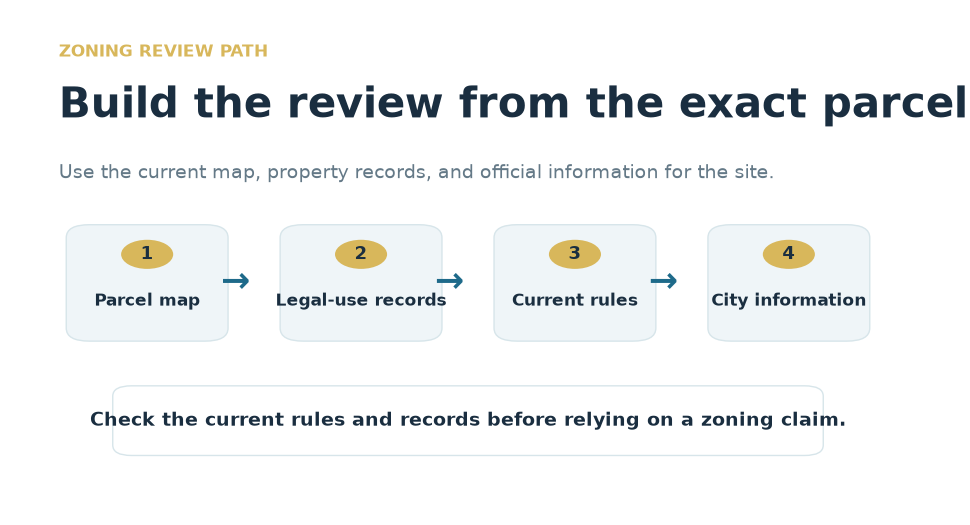
Three checks before you rely on a zoning claim
Check the parcel
Match the address to the current map and district.
Check the records
Review use history, approvals, plans, and any known conditions.
Check the rules
Read the current code and any overlay or redevelopment plan.
Why zoning questions can change a property review
Zoning rules can address permitted uses, building height, setbacks, lot coverage, parking, and other site standards. A proposed use or change may need a separate review from the existing use.
A property file may contain older plans, certificates, permits, or board approvals. Those documents can help explain the site history, but they do not replace the current zoning rules for the parcel.
Jersey City’s Division of Zoning provides current zoning information and process guidance. It is a useful starting point for reviewing an address in Jersey City. [1]
Start with the exact parcel and build the review from current records and official information. [1]
How base zoning and overlays work
A base zoning district sets the main rules for a parcel. The district name alone is not enough. The current code explains the uses and standards that apply to that district.
An overlay can add rules on top of the base district. An overlay may address a topic such as historic design, environmental conditions, transit access, or a special planning area.
Read the base rules and overlay rules together. The answer can depend on the exact parcel and the current map. Use the local government source for the most current material. [1]
Which records belong in a zoning file
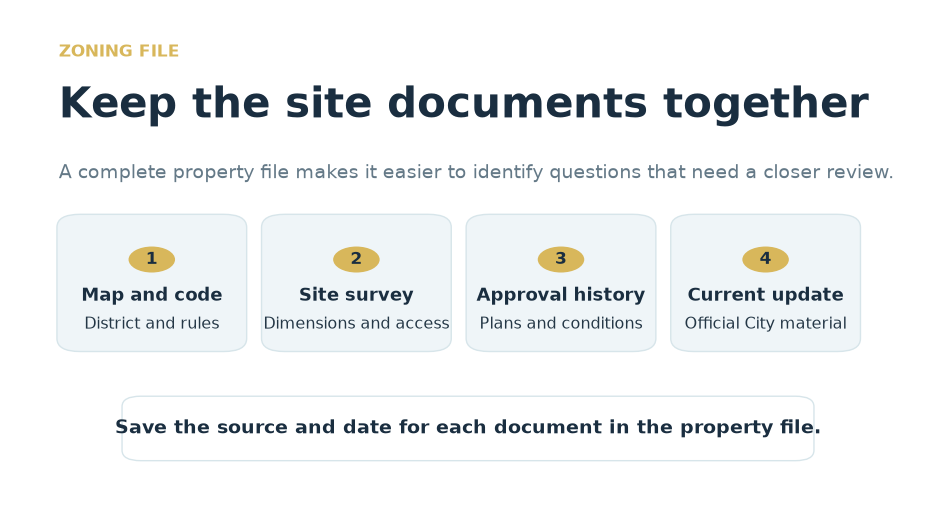
Keep the zoning map, zoning text, survey, title information, permit records, and any prior planning or zoning approvals together. Save the source and date for each document.
Look for conditions that may apply to the property. These can include a prior approval, a required improvement, a recorded limitation, or an open issue. The property records should be reviewed as one file.
Site details matter too. Lot size, building dimensions, setbacks, access, and parking can affect how the current rules apply to an existing building.
Keep the parcel map, site records, approval history, and current official information together.
What a zoning board review can involve
Some proposals may require a board review, depending on the local rules and the specific site. The process can involve plans, notices, public materials, and meetings.
The City’s current zoning resources can help identify the applicable process. Procedures and requirements can change, so use the official source for current information. [1]
A clear property file helps the reviewing professionals understand the existing use, site conditions, and questions that need to be resolved.
How broader underwriting information fits in
Property use and site records can be important to a broader review. Institutional underwriting guidance also reflects the need for reliable property information and documentation. [2]
That does not make a broad rule for every property. The documents, the local process, and the specific site must be reviewed on their own facts.
For a question about legal use, zoning interpretation, site design, financing, or valuation, the appropriate qualified professional should address the specific matter.
Sources
Sources for further verification
Use current official and institutional sources when reviewing a specific property or local process.
Start with the property address, the current zoning map, the district rules, and any overlay or redevelopment plan that may apply to the parcel.
Not always. The property’s records, prior approvals, and current rules help explain the status of a use. A qualified professional can address a specific question.
An overlay is a mapped set of rules that can add to the base zoning district. Review both the base rules and the overlay rules for the same parcel.
Jersey City’s Division of Zoning is the official starting point for current zoning information and process guidance. [1]
Considering a Sale?
Talk to X1031 Exchange Before Your Closing
Contact X1031 Exchange to learn about the company’s services. For tax, legal, financial, zoning, or real estate advice, work with your own qualified professionals.